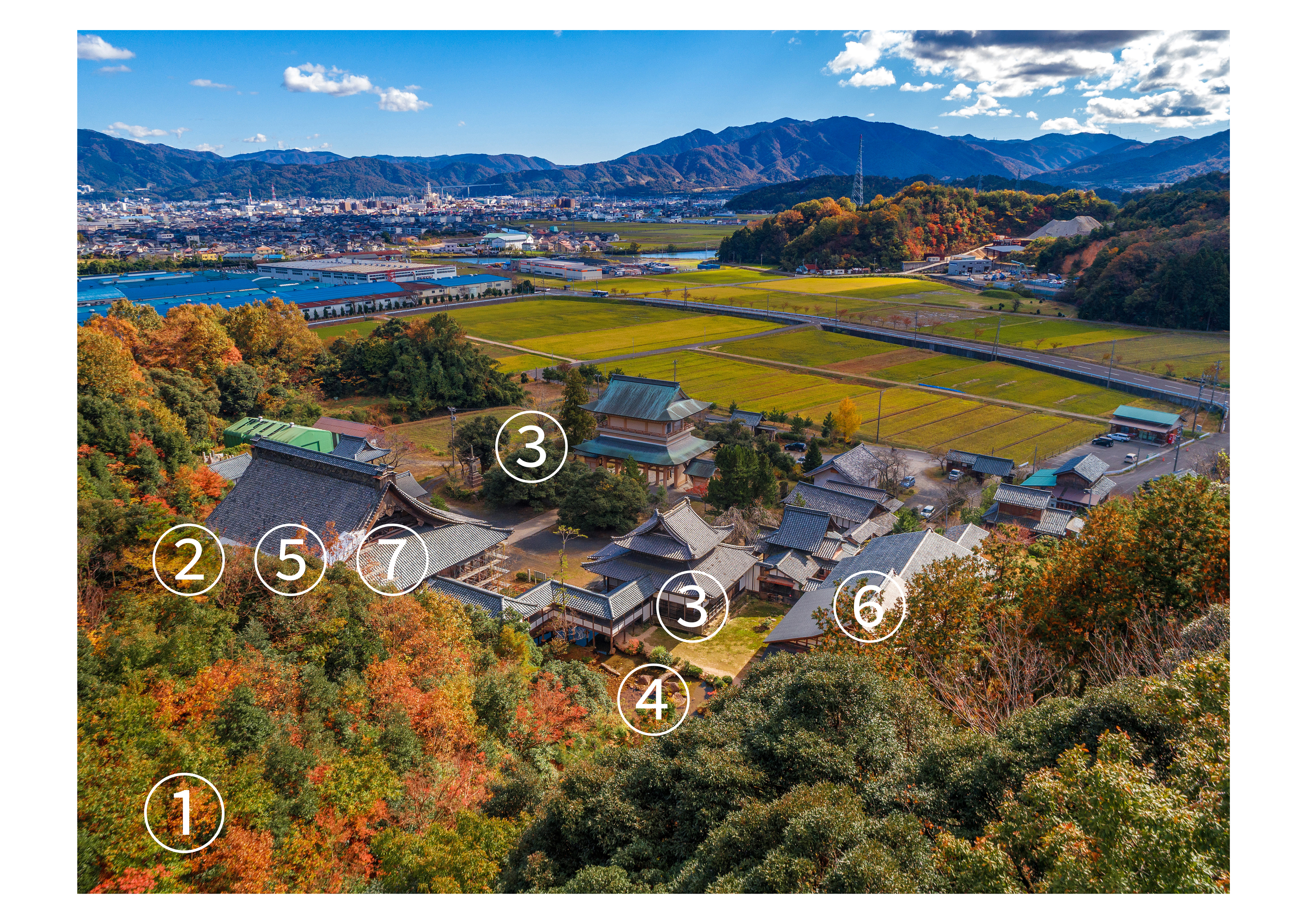
The Seven Mysteries of Saifuku-ji
These seven mysteries were not created to attract visitors.
They have quietly lived here, passed down through prayer, memory, and daily
life.
Some have stories. Some have explanations.
And some remain unanswered. They are not meant to be solved. They are meant
to be encountered.
These mysteries did not arise by chance.
They were shaped by history, belief, and a space created for Pure Land
devotion.
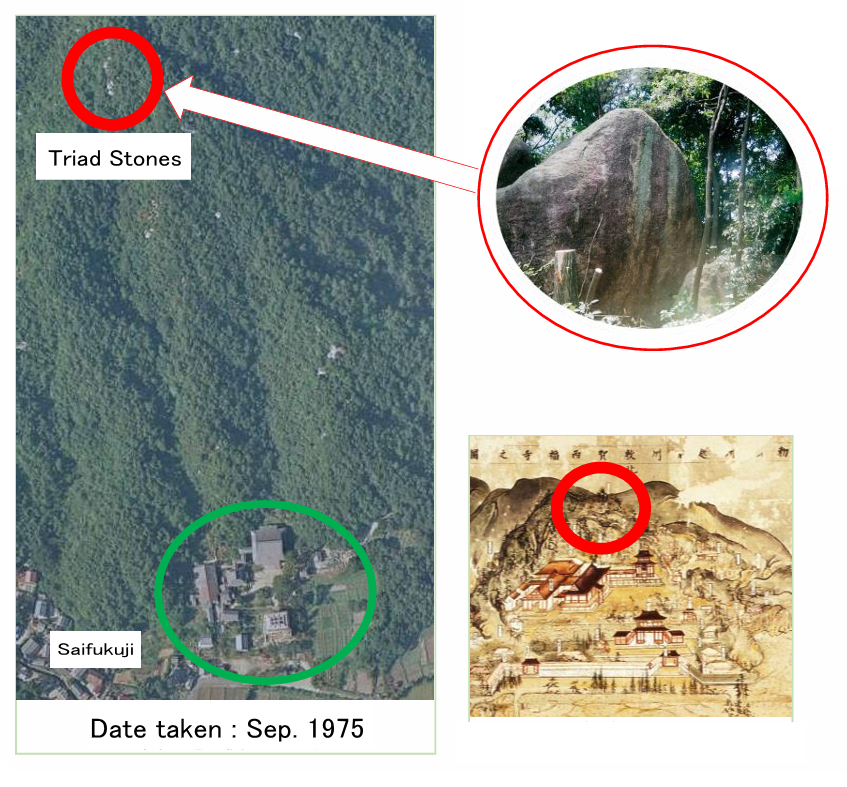
1.Sanzonseki (Triad Stones) and Megalithic site
Triad Stones are the historic stones on which Saifukuji-Temple was built.
The characters that represent Buddha’s name, Namu Amida Butsu(南無阿弥陀仏) are
carved into the stones. The garden the stones populate represents a Buddhist
saint who leads the dead to the Nirvana.
It is believed that when Ryonyo, the founder of a temple, visited Tsuruga
Port on his pilgrimage, he saw Amida Snson – a set of three Buddhist deities-
standing in the light, followed it to this place, where Sandon deities
turned into large stones.
Ryonyo decided to build the temple, Saifukuji-Temple was then built after
receiving imperial sanction.
The surrounding mountains are also full of megaliths with mysterious legends
2.White fox and Hokora (small shrine)
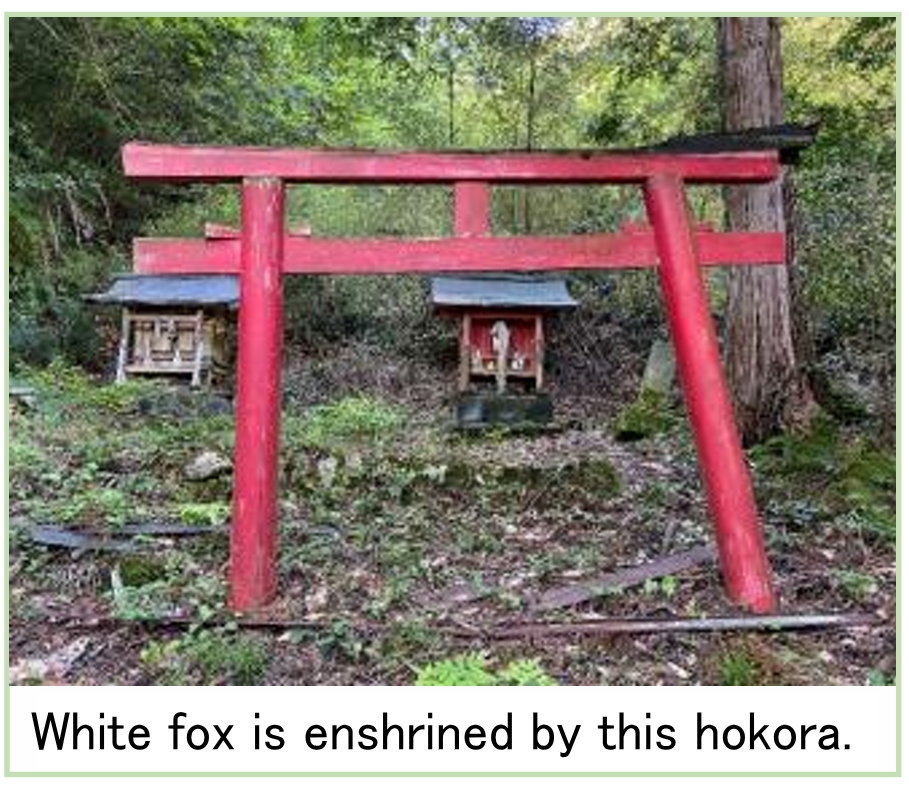
It is said that when Ryonyo came to this place following the light, a white
fox appeared and lead him to this foothill.
It is believed that succeeding chief priests are guided by the white fox.
The white fox is enshrined by this hokora, or small shrine.
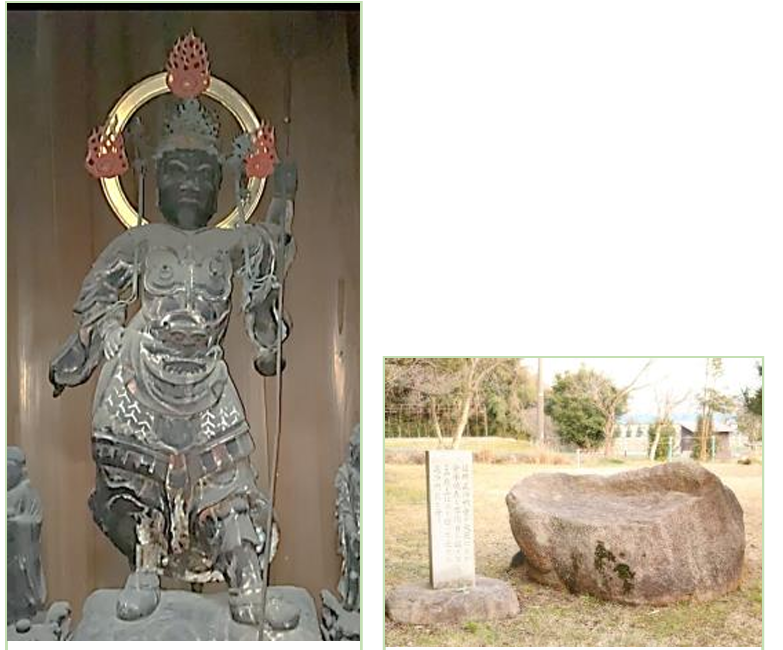
3.Bshamon Rock and Bishamonten Statue
This Bishamonten statue, created by the priest Ryonyo, was previously enshrined in another Buddhist temple. When that temple was destroyed by a fire, the statue ran away by itself to stand on this rock, which is now called Bishamon Rock.
4.Shisyu (four teachings) Hall and Pond of Eight Virtues
Honen the founding figure of the Jo do-shiu (lit. pure land) branch of Buddhism, states that everyone can be saved by reciting “Namu Amida Butsu.”The Shishu-Hall and Pond in the garden are reflections of his teachings. When you move from the Miei-dou to the Hall, you can see the Amida-dou and garden which represent his branch of Buddhism.
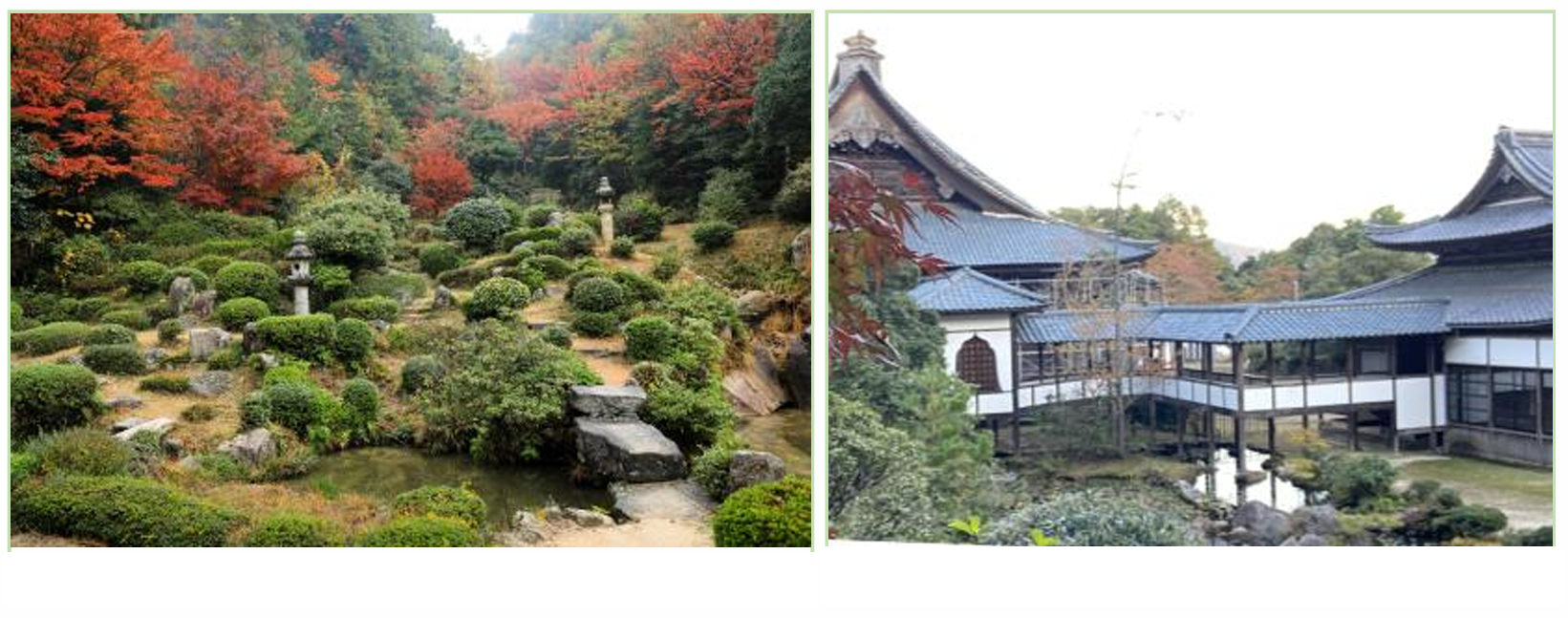
【waterfall 】Represnts Buddhist paradise.
【Hallway】Represents Shishu (the four teachings)
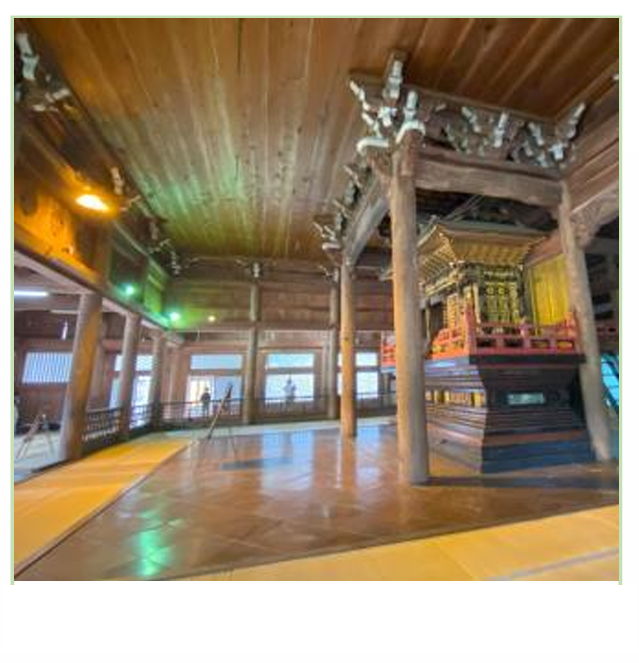
5.The Seamless Celiling of Miei-do Hall
Miei-dou was built in 1811 and has since been designated as a National
Important Cultural Property and Japanese Heritage.
The imposing building has a beam length of 14 ken and a girder length of
13.5 ken, and its large ceiling is made of a uniquely long single board
(15 m long) with no joints.
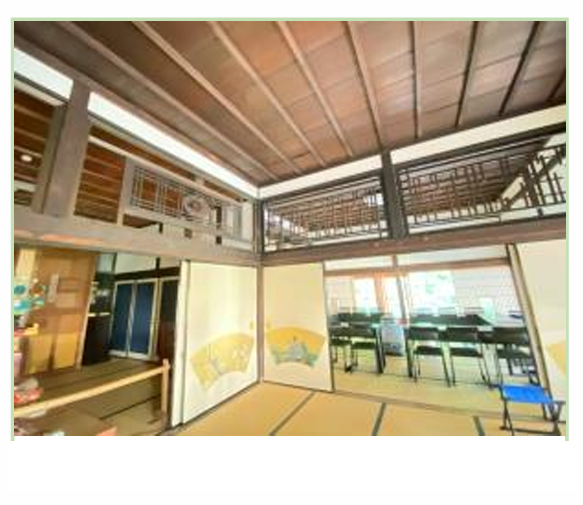
6.The calling and Transom (ranma) Droawing Room
The Shoin Drawing room was built during the Keicho era (1596-1598) at the
behest of Lord Hideyasu Yuki. Hideyasu Yuki and Tadanao Matsudaira (the
second lord of the Fukui domain) enjoyed Noh performances. in the Shoin
It is said that the ceiling was completed in one night to improve the acoustics
during Noh performances. Each of the rooms, from the first to the third,
as well as the Buddha room, has a different ceiling height and balustrade,
a characteristic construction that takes acoustic effects into consideration.
7.The mitsuba-aoi Family Crest
Because Hideyasu Yuki’s son Don’ei Shonin (grandson of Ieyasu Tokugawa) inherited the position of 21st chief priest, along with its title of “Koshi-no. Shurei”, it was also permitted to use the 15-petalled three-lead hollyhock crest.